
A Banking Model That Works In The Badlands
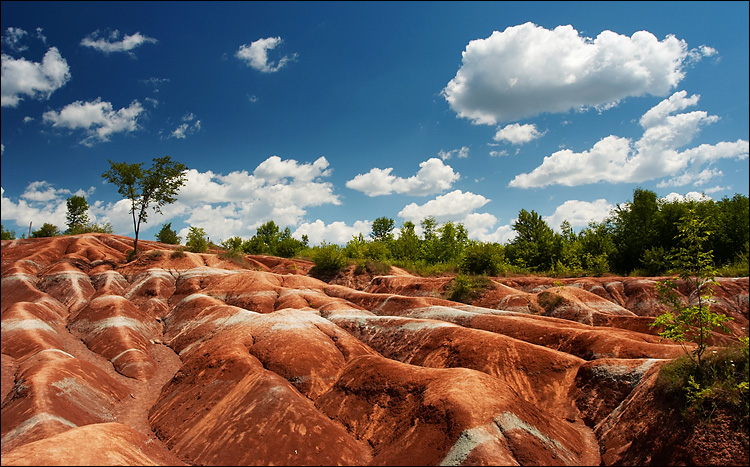
North Dakota Badlands
Guest post by Wil Martindale of Let Them Fail
What's The Big Deal About State Banks? North Dakota Has The Answers
The only State in the Union chartered to be the primary depositor and guarantor of the deposits of its own bank is North Dakota. All state funds are deposited into this bank (by law) and its deposit base becomes the capital reserve from which to create credit.
Our system of hopelessly insolvent mega banks across the nation has leveraged, gambled and lost it all in the insane derivatives casino. Despite more than six months of massive taxpayer bailouts, credit markets are still frozen, the economy continues to collapse and 2.3 million more Americans have lost their jobs since Obama took office.
But North Dakota’s GNP has grown 56%, personal income has grown 43%, and wages have grown 34%. The state not only has no funding issues, but this year it actually has a budget surplus of $1.2 billion, the largest it has ever had.
Why? Because of sound fiduciary oversight and proper management.
You see, the Bank of North Dakota does not employ 20,000 people at an average wage of $90,000 per year. Employees do not receive $60,000 annual bonuses and executives do not take home $40,000,000 in compensation, bonuses and options. The State Bank of North Dakota does not wager 1000 times it’s deposit base (as Goldman Sachs does with a credit exposure risk of 1056% to capital ratio) on the speculative derivatives casino in order to grossly reward the risk that brought down the world’s economies.
In point of fact:
The Bank of North Dakota (BND) was established by the state legislature in 1919 specifically to free farmers and small businessmen from the clutches of out-of-state bankers and railroad Barons. By law, the State deposits all its funds in the bank, which pays a competitive interest rate to the State treasurer. The State, rather than the FDIC, guarantees the bank’s deposits, which are re-invested back into the State in the form of loans. The bank’s return on equity is about 25%, and it pays a hefty dividend to the State, which is expected to exceed $60 million this year. In the last decade, the BND has turned back a third of a billion dollars to the State’s general fund, offsetting taxes. The former president of the BND is now the State’s governor.
The BND avoids rivalry with private banks by partnering with them. Most private sector lending is originated by a local bank. The BND then comes in to participate in the loan, share risk, and buy down the interest rate. The BND provides a secondary market for real estate loans, which it buys from local banks. Its residential loan portfolio is now $500 billion to $600 billion. Guarantees are also provided for entrepreneurial startups, and the BND has ample money to lend to students (over 184,000 outstanding loans). It purchases municipal bonds from public institutions, and it backs loans at 1% interest. The BND also has a well-funded disaster loan program, which helps explain how Fargo, when struck by a disastrous flood recently, managed to avoid the devastation suffered by New Orleans in hurricane Katrina.
North Dakota has also managed to avoid the credit freeze, through the simple expedient of creating its own credit. It has led the nation in establishing state economic sovereignty.
That is the key — establishing economic sovereignty at the level of the States -that is the last vestige of hope for this country. TAKE ACTION in your state to be part of the solution.
It truly must be obvious to anyone in America able to read and think for themselves that this federal government, bought and paid for by the economic Imperialists, with its ranks completely infiltrated by former Wall Street executives, simply DOES NOT HAVE the best interests of the average taxpayer in mind.
Not when we are being sucked dry by the continuing bailouts, which do nothing but place the middle class backbone of this country into a debtor’s prison of taxation, reduced social services, pay cuts, lost jobs, tighter credit, and with no end in sight to the greed and excess of the profit-obsessed, predatory money changers they serve.
This is why it’s so important to TAKE ACTION now. Let the rest of the world deal with the White House. Trust me, they will. We the People must collectively take action at the level of the States, where politicians are still accessible and many still remember what it’s like to be true public servants.
If the pressure comes from the American taxpayer at the level of the States and the international pressure comes from the developed nation’s foreign governments, together, the real, hard - working people of the world can correct the problems on Capitol Hill, where neither body alone could.
TAKE ACTION in your state to be part of the solution now.

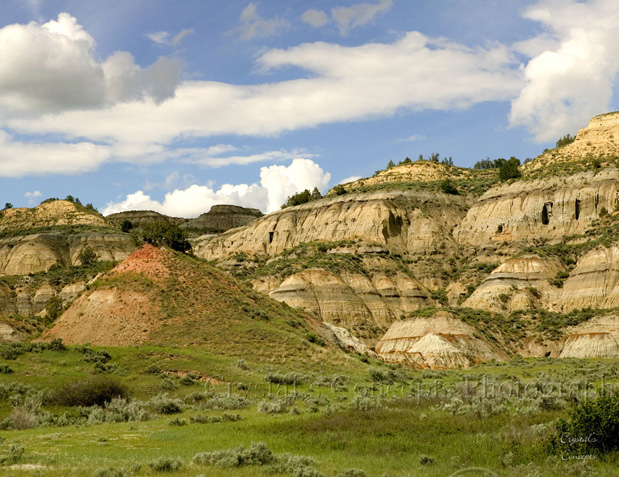
All photos are North Dakota Badlands


 Jul 15, 2011 at 3:50 PM
Reader Comments (15)
Senate Blocks Bill To Audit The Fed As Government Prepares For Second Round Of Looting
Search
Web ML
2009-07-07 — prisonplanet.com
"A Senate amendment based on Congressman Ron Paul’s successful House bill to audit the Federal Reserve was blocked by the Senate yesterday evening on procedural grounds, as Jim DeMint slammed the Fed for refusing to disclose where trillions in bailout funds had gone, while a top Obama administration advisor called for a second “stimulus” package to be prepared."
The answer to the problem is simple. Prosecute fractional reserve bankers for fraud, because that's exactly what it is.
I attempted to engage discussion of this in a previous post...the problem with eliminating FRL is that credit disappears...I understand that too much credit has been and remains the problem...but SOME credit is vital to a growing economy...
I have suggested that we put acceptable limits on FRL and keep credit creation going.
Feel free to tell me where I'm wrong...I asked the same question in a post dedicated exclusively to this Q and there was no one who had an answer...
I still am waiting for the ANTI-FRL crowd to explain how the alternative would create enough investment and credit to fund new technologies, new industries and new companies...
Thanks for your comments.
In short, they're just too short-sighted, greedy and stupid to replicate the Bank of North Dakota success in other states. They refuse to accept or participate in a Game in which EVERYONE CAN & WILL WIN! They want a LOSER - but not to be them.
No one wants to dissolve the federal reserve. What we want is equal access to credit and capital and transparency in money markets. The federal reserve is a public-private partnership in which the only profiteers are the private shareholders and wealthy purchasers of government-backed debt/money. The United States should own the federal reserve and money should be loaned out as credit to small businesses to encourage growth in the lower and middle classes. It has been operated as a fraud against the American public since inception by controlling interest rates through massive funding of preferred markets like Wall Street. The federal reserve profits .93 cents of every bill printed and then loans those profits ONLY to friends and family of American aristocracy, politics and co-joined financial entities. How can you sit there and really pitch the idea that people who want equal access to capital somehow wish to destroy the country by shutting down economic activity? Is it fair that the wives of bank executives get fully-insured, zero interest loans to buy seized properties from banks who got 100 cents of the dollar bailouts and if their investment doesn't perform are guaranteed by the taxpayer the principal plus profits???
Have you even read rstone lately?
"The BND then comes in to participate in the loan, share risk, and buy down the interest rate. The BND provides a secondary market for real estate loans, which it buys from local banks."
Yup, this sounds a lot like the Fed. An entity like this could easily become corrupt, but if other states want to do this, I'm all for decentralizing the power, although not sure how this would fair elsewhere.
The problem seems to be that private entities can essentially expand the government-mandated monopoly money supply. You are essentially forced to use Federal Reserve Notes (FRN) in payment of debts and taxes. Maybe Ron Paul really is right about simply legalizing competition.
The problem with the FED is that it pretends to be a government entity and then generates profit for private investors.
There are two solutions, 1) privatize the FED and allow competetion, as Ron Paul would do, even though our corrupt system cannot really allow real competition, or 2)Establish public banks and make them turn over their profits to the community as Ellen Brown has advocated.
Banking is not like productive industry. State officials can run a bank just as well as a bunch of out-of-touch, over-educated fat corporate yuppies can. It does not produce something that requires craftsmanship and so BND is proof that the state can run a bank better than private industry and benefit the public at the same time. It would be no more corrupt than our current system, in which the government is owned by predatory, private interests. It would allow a greater credit flow to private industry which would allow the real productive businesses to flourish in a much more open, capitalistic system.
We advocated for commonwealth banking at the level of the states where state banks modeled on the BND type economy were proposed. These would have been sovereign economies where tax revenues are the deposits, land (and buildings) the capital base (you know, the stuff that Greece is selling off now?) and yes (as D.B, righty asserts) the same kind of REASONABLE fractional lending (10 to 1, not 1000 to 1) that has spurred growth for many centuries in many economies would take place, divorced from the corrupt Federal Reserve laundering system (bonding out to Wall Street).
But those measures assumed that there is a future for the U.S. dollar ... and the Bernanque, along with the class politique, are ending the dollars global reserve status. They will force the rest of the world to do for us what we politically cannot - impose self-restraint. And so this changes many assumptions.
There could be many competing sovereign economies in a world of fractured monetary ecosystems if we assume that the international monetary and financial system (IMFS) will basically self-destruct and burn out, leaving a world of localism, regionalism, or nationalism, all fiercely independent. This will not happen.
The true Giants of wealth see beyond this end game, beyond the coming paper inferno.
The current IMFS was an agreed upon compromise. A post world war experiment to give the last standing country (USA) global reserve status - to facilitae the future hopes and dreams of entire continents bombed into rubble, and whole generations of people without futures given hope.
The massive credit expansions that took place served mankind well. Yes, we had our exhorbitant privilege, but we did a lot of good in the world as well. And now the end of this system, which has long been underway, is nearing. The next evolution in monetary systems is long overdue.
We can bail out debt paper with more paper debt until the lender of last resort is God almighty himself and it will not save the paper. This quiet 14 year run (and the secret oil deal that came with it) will come to a close and the only thing that will matter is your "position" in the redemption line when the paper hangers say, "I'm sorry, we're closed."
And it will not be a paper bank that flares the panic. It will be a bullion bank. See if you can spot reality coming. It's not as easy to identify as one might think.
What, exactly, is a "bullion bank". Where is it (are they?) located and how does it (they) work?
Thanks, tcox
Barclays Bank PLC, ScotiaMocatta, Deutsche Bank AG, HSBC Bank, JPMorgan Chase Bank & UBS AG are the six remaining bullion banks.
How does it work? That's a question that many hours of reading cannot answer, because the way it is presented to work is a well orchestrated illusion.
The many hours of reading to dispell that illusion probably begins here:
http://fofoa.blogspot.com/2011_04_01_archive.html
I link to this article as a good "stunner" as it was shown to eventually convert a certain "deflationist" where no other argument would hold sway.
If you can hang with this article, and a few more within this blog, you'll probably have your world rocked by it. Heady, with some interesting mind-opening revelations, I assure you. Let us just say that in letthemfail, I have warned of derivatives time and time again. Yet, paper debt can be bailed out with more paper debt a quadrillion times over.
At some point, people will realize that paper has no value under this infinite acceleration. or, as "another" once said, "people who trade in derivatives will some day be paid in derivatives."
It's about relative value ... and how the paper endgame brings the final revaluation of all our "assets". I hate to be cryptic, but you have to be. People can't be "shown", any attempt to do that ends in ridicule. They have to "see" for themselves.
Good Luck!
Thank you for your words of encouragement and especially your link to the FOFOA blog and ultimately to the Gold Trail. I have owned physical gold for about 10 years and even a little "paper gold" which I intend to replace with the real stuff shortly. I am by no means "wealthy" in the monetary sense and I have spent many decades watching the value of my meager savings denominated in federal reserve notes all but disappear as far as purchasing power goes. I have also had the experience of watching 30 years of IRA savings invested in a REIT go away in a few weeks time because of the financial shenanigans of the big New York banks in 2008. I will take your suggestion and begin reading in the blog space that you have referenced.
Again, I want to thank you for the hints.
tcox